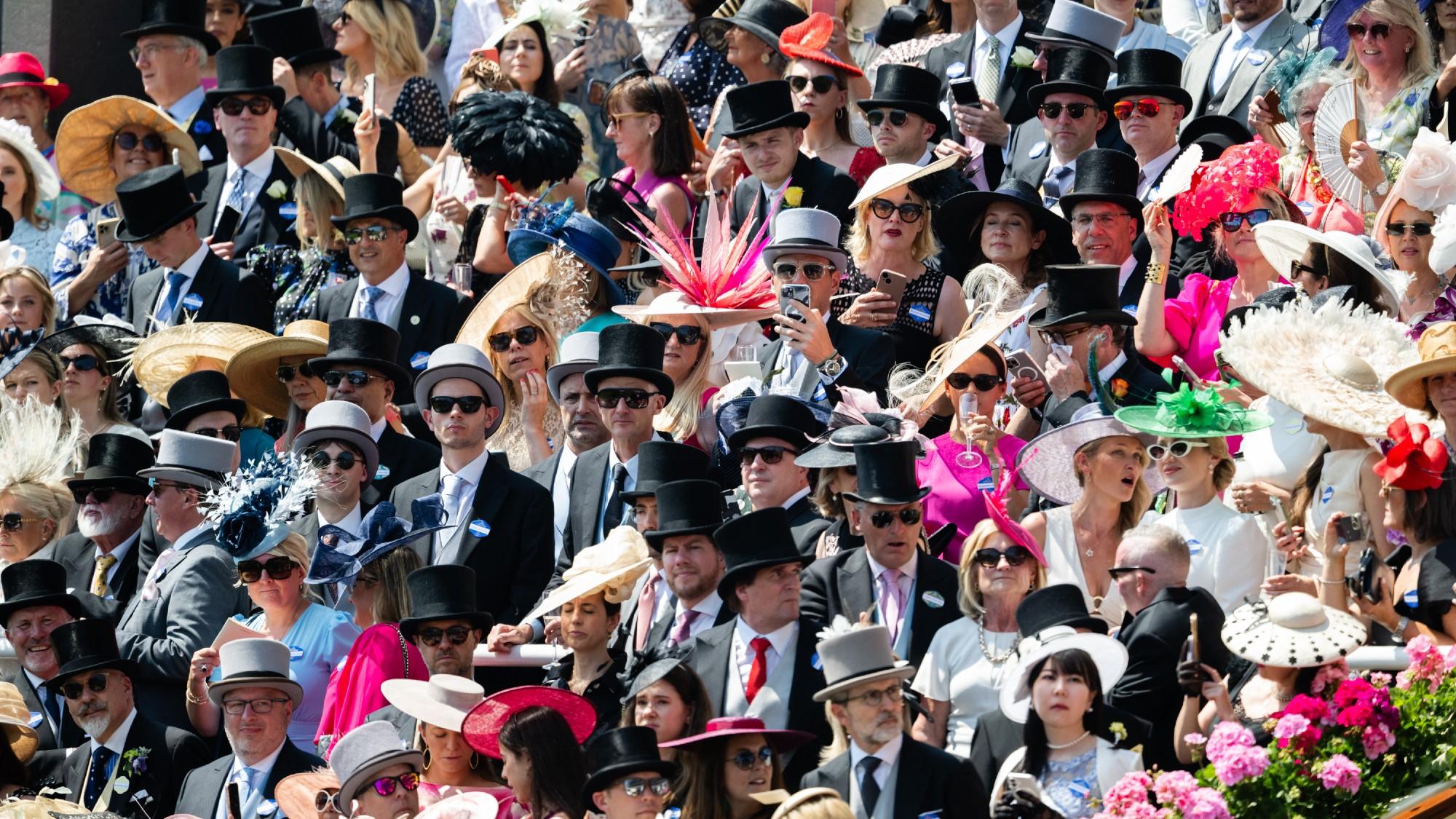
Race-Day Fashion and the Visual Culture of Horse Racing
Horse racing has always been about more than horses.
For spectators, particularly at major meetings, the event can also be a carefully constructed visual experience involving clothing, colour, architecture, landscape and social ritual.
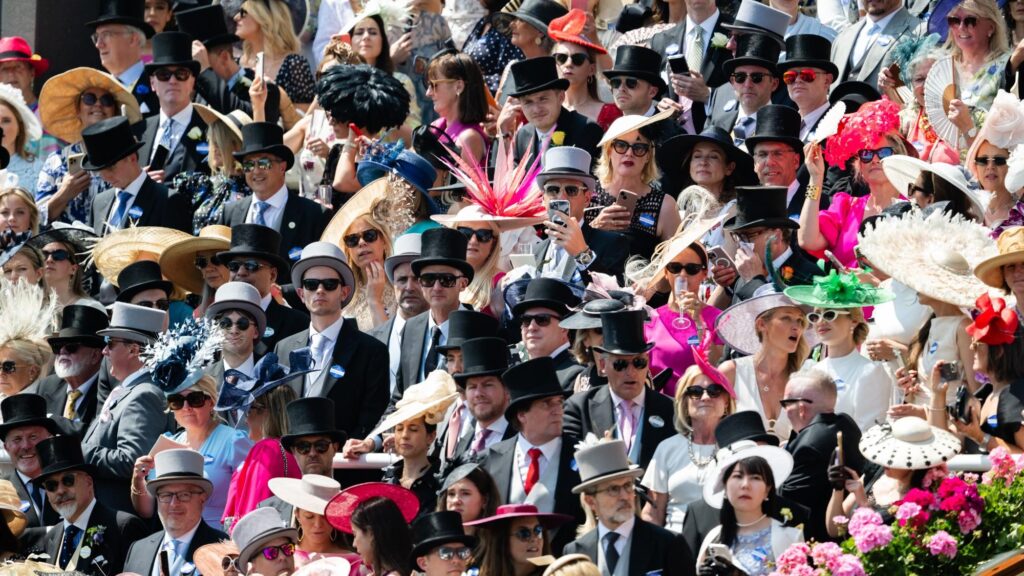
Few sporting environments make this clearer than race day.
The racecourse becomes a temporary exhibition of fashion.
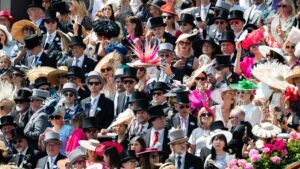
Hats, dresses, suits, accessories and racing colours create thousands of individual combinations. Photography turns these fleeting appearances into images that can circulate long after the race has ended.
This relationship between racing and fashion is significant because clothing at the racecourse has traditionally performed several functions at once.
It can communicate formality.
It can express personality.
It can signal social occasion.
And increasingly, it can become a form of visual experimentation.
The connection with art comes through the importance of composition.
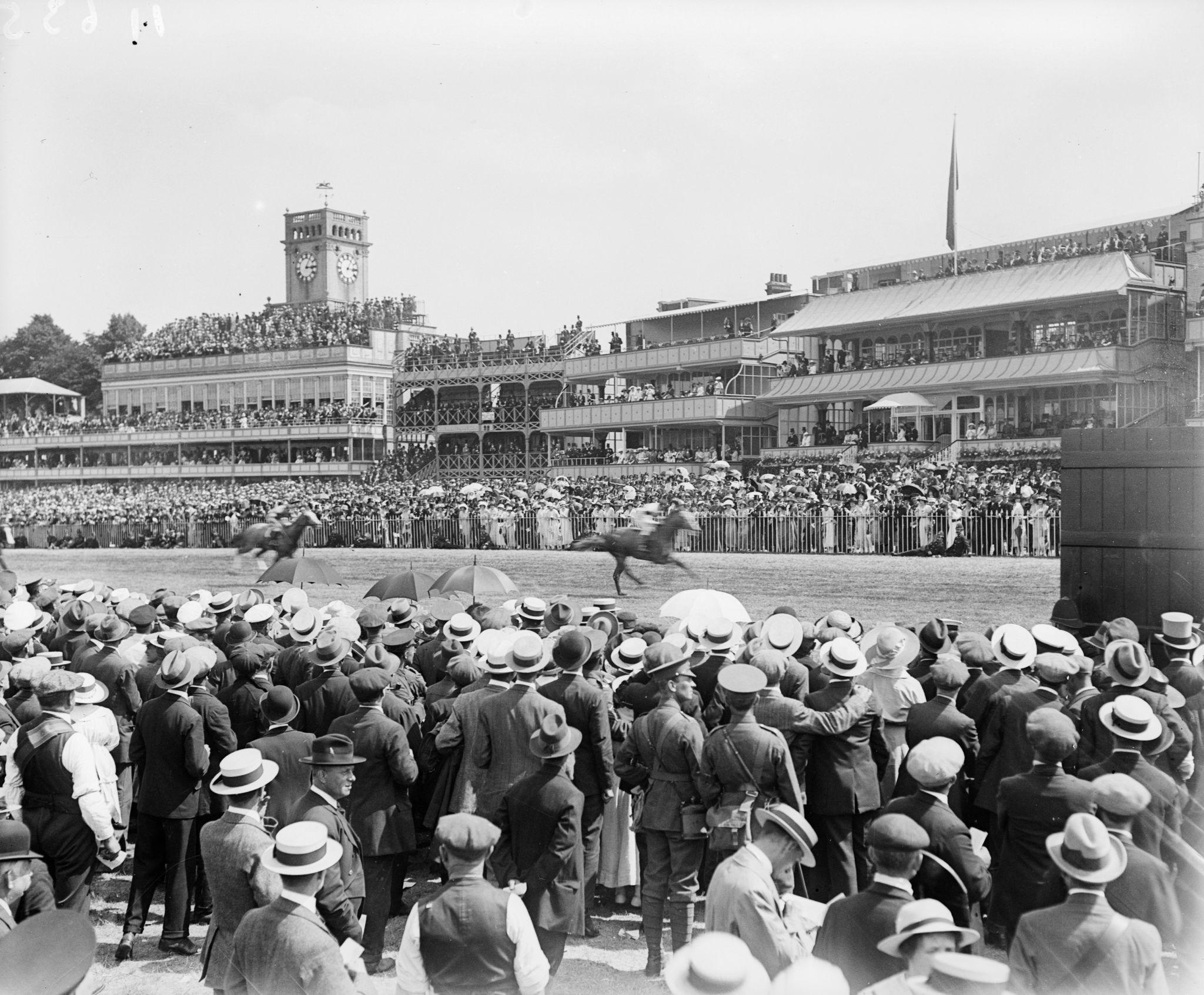
A race-day photograph is rarely just about an individual outfit. The image includes the person, the architecture, the crowd, the surrounding landscape and the movement of the event.
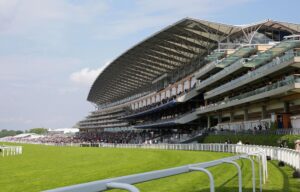
A spectator standing beneath a grandstand can become part of a larger composition.
A group of guests can create a pattern of colour.
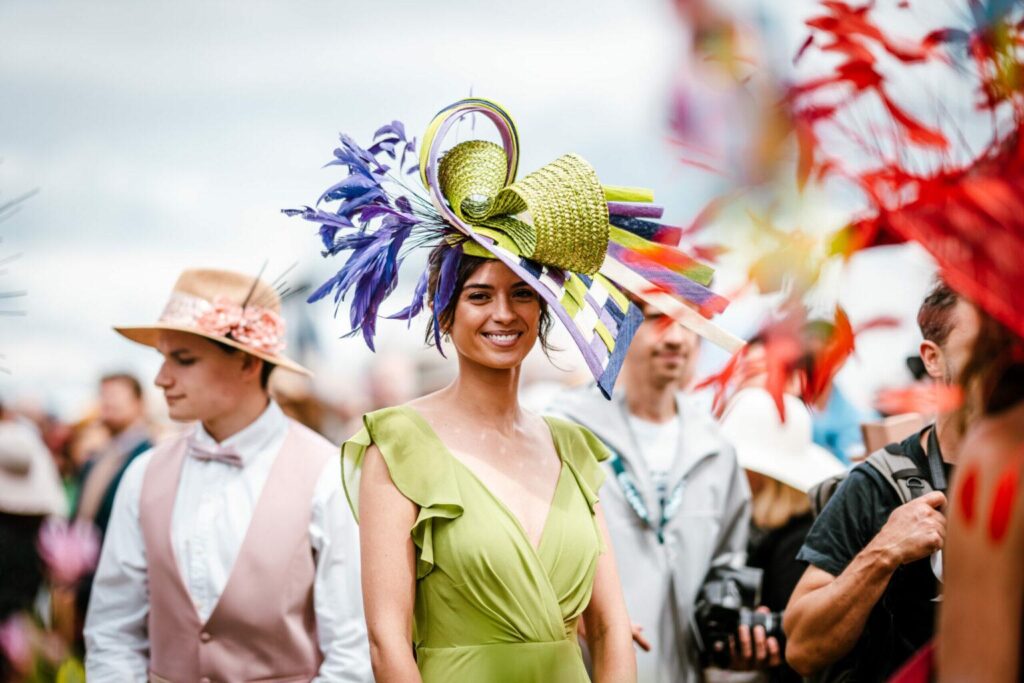
A striking hat can become the visual centre of an image.
This is why fashion photography and racing photography overlap so naturally.
Both are interested in bodies within carefully constructed environments.
The racecourse also has a distinctive relationship with colour.
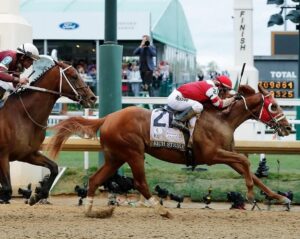
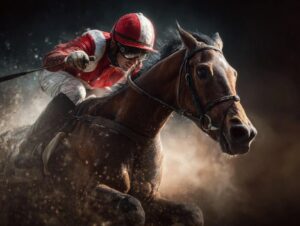
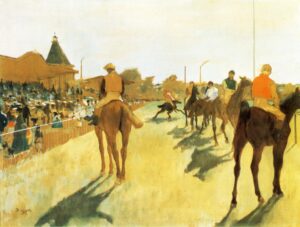
Jockey silks introduce one palette, spectators introduce another, and the surrounding landscape supplies a third. During a major meeting, the combination can create a constantly changing visual field.
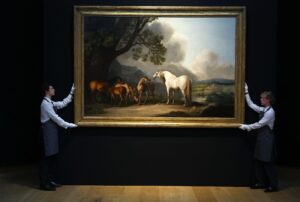
Artists have long been interested in precisely these relationships between colour, movement and public life.
The racecourse provides all three.
There is also an element of performance.
Dressing for a major race meeting can involve a conscious understanding that one is going to be seen. Clothing becomes part of the occasion.
That makes the racecourse different from many ordinary sporting environments.
A spectator is not simply watching a competition.
They are participating in a cultural event.
This distinction is important when considering racing through an art-world perspective.
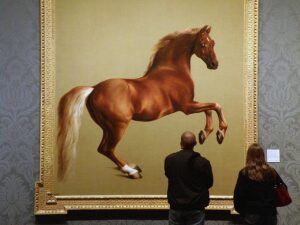
Art does not necessarily have to exist inside a museum. Visual culture is produced wherever people use images, objects, clothing, architecture and design to communicate meaning.
Race day is an excellent example.
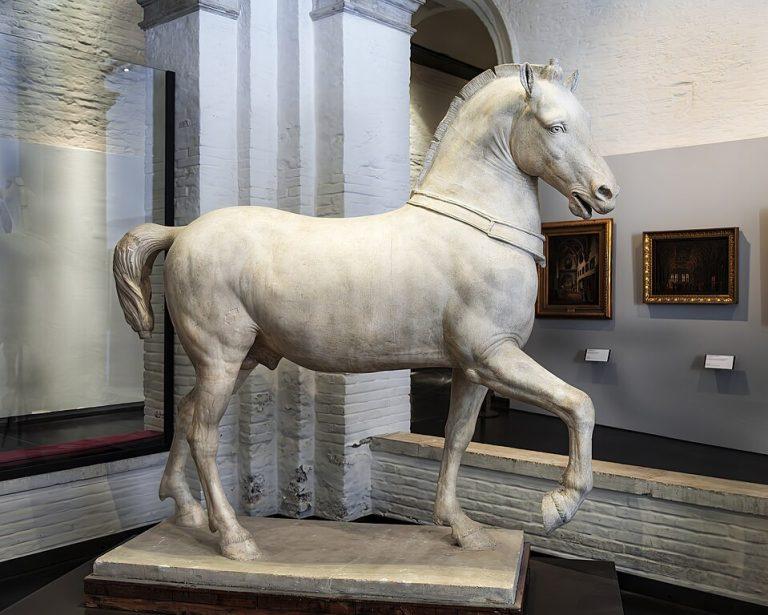
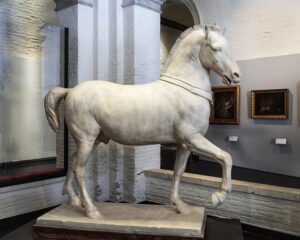
The hat can function almost like sculpture.
The outfit can function like a composition.
The grandstand can function like a backdrop.
Photography can turn the entire scene into an image.
And the crowd becomes both audience and subject.
This helps explain why major racing events have generated such a rich photographic archive.
The horses provide the drama, but the spectators provide another story.
They reveal changing ideas about fashion, class, gender, celebrity and public identity.
Seen this way, race-day fashion is not merely a decorative side issue.
It is part of the cultural history of horse racing.
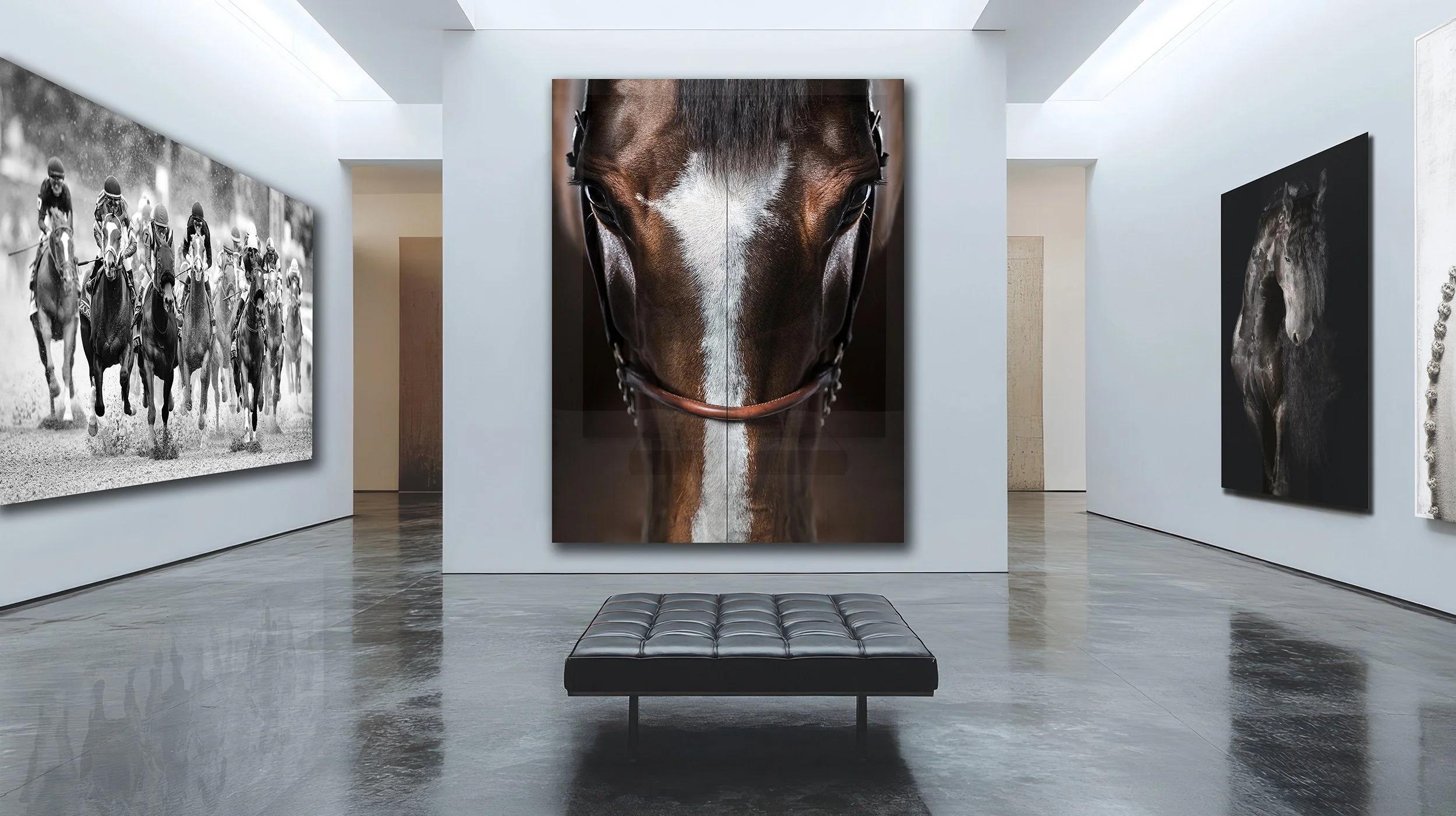
The track is a sporting venue, but on major race days it can also become a temporary gallery of human style.