Degas at the Racecourse: When Horse Racing Became Modern Art
When Edgar Degas turned repeatedly toward horses, jockeys and racecourses, he was not simply choosing another picturesque subject. He was participating in a larger transformation in European art.
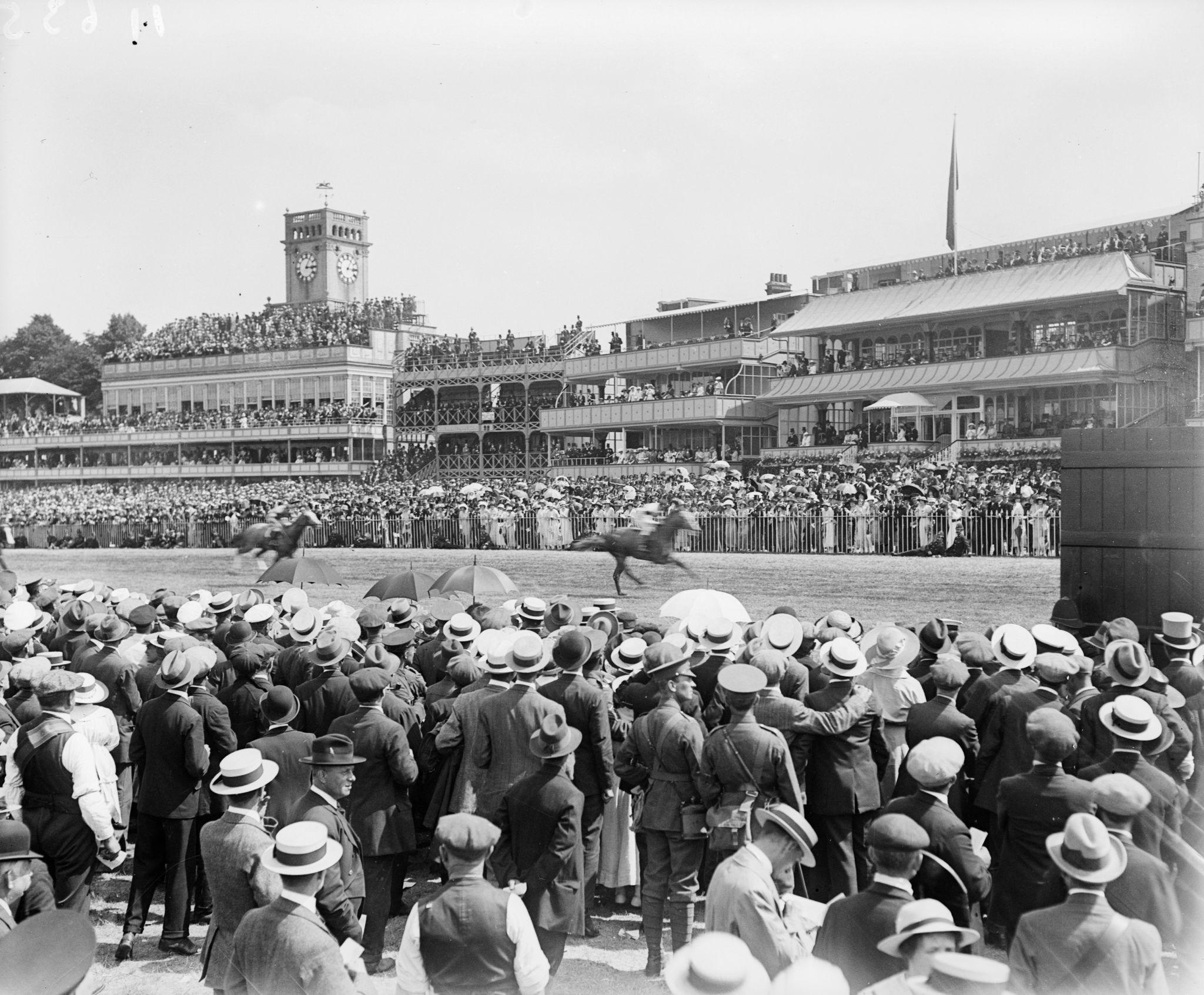
The nineteenth century was changing rapidly. Cities were expanding, photography was altering ideas about representation, transportation was becoming faster, and artists were increasingly interested in ordinary modern life. The racecourse offered an almost perfect setting for this new visual culture.
It contained speed, fashion, crowds, money, animals and human bodies in motion.
For Degas, it also offered an opportunity to study movement.
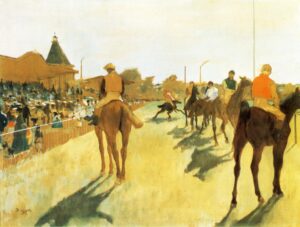
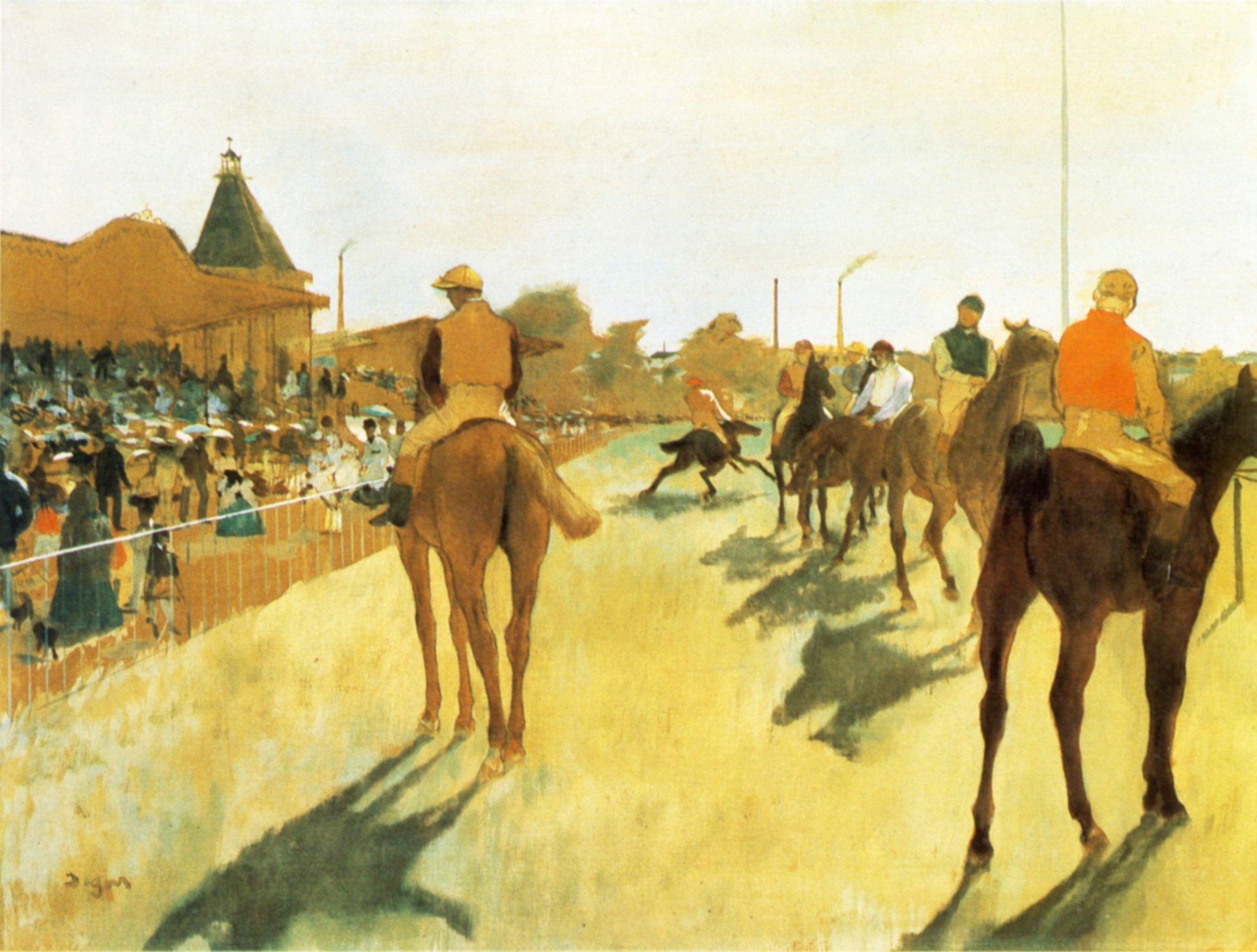
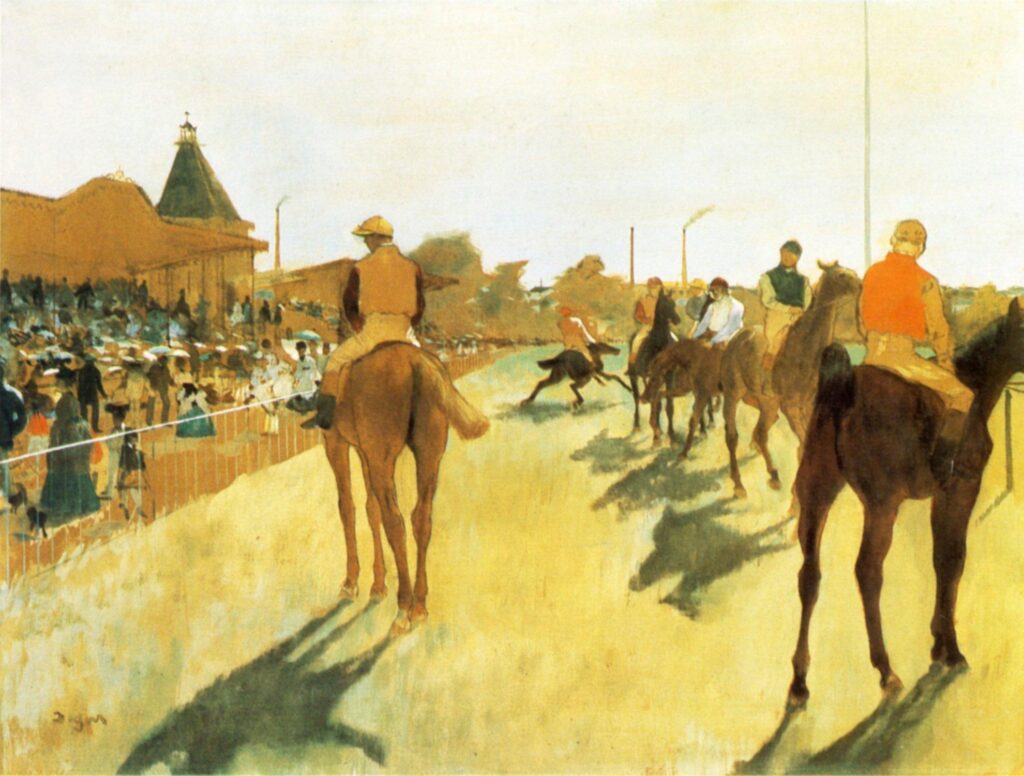
Degas’s fascination with horses and racing became particularly important after the early 1860s. Christie’s records that he produced around 45 oil paintings of horse races, alongside sculptures, pastels and studies of horses. Rather than concentrating exclusively on the decisive moment of a race, Degas often focused on the atmosphere immediately before it, when horses and riders appeared tense and expectant.
That choice is revealing.
The traditional sporting image often celebrates achievement: the winner crossing the line, the champion standing proudly or the rider receiving recognition.
Degas was frequently interested in something less obvious.
He looked at the pause.
A horse standing almost motionless can contain enormous physical energy. A jockey sitting quietly can still appear ready for sudden movement. The tension exists because the viewer knows what is about to happen.
This is one reason his racing works continue to feel modern.
Degas also approached the racecourse as an environment. Horses were not isolated from the people around them. Riders, trainers, spectators and landscape could all become part of the composition. His interest in unusual viewpoints and cropped compositions made the racecourse look less like a formal sporting arena and more like a constantly changing visual field.
His drawings reveal how seriously he studied the subject. A small study of a jockey could concentrate on posture, balance and the relationship between human body and horse. Christie’s describes one such drawing as focusing primarily on the jockey and capturing the rider’s relaxed physical relationship with the animal.
The horse itself was equally important.
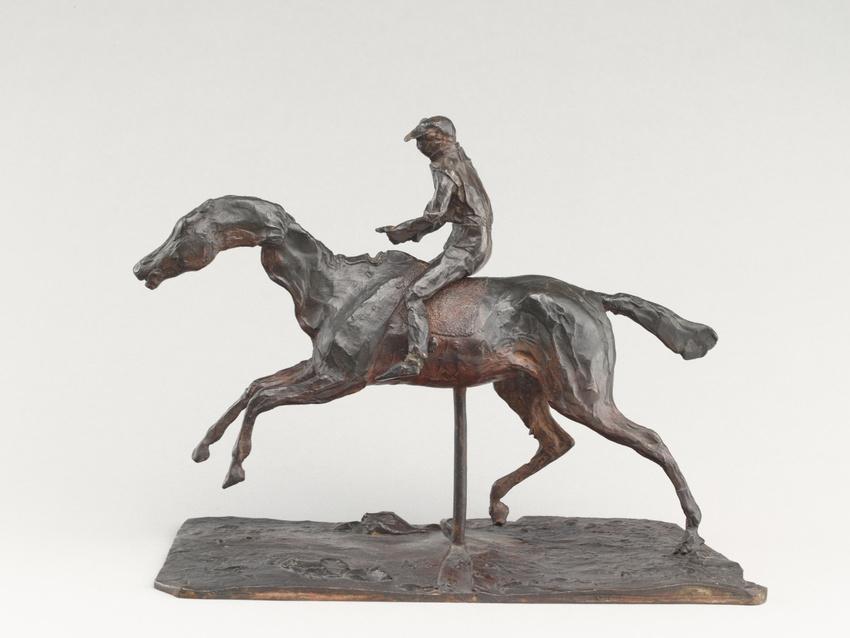
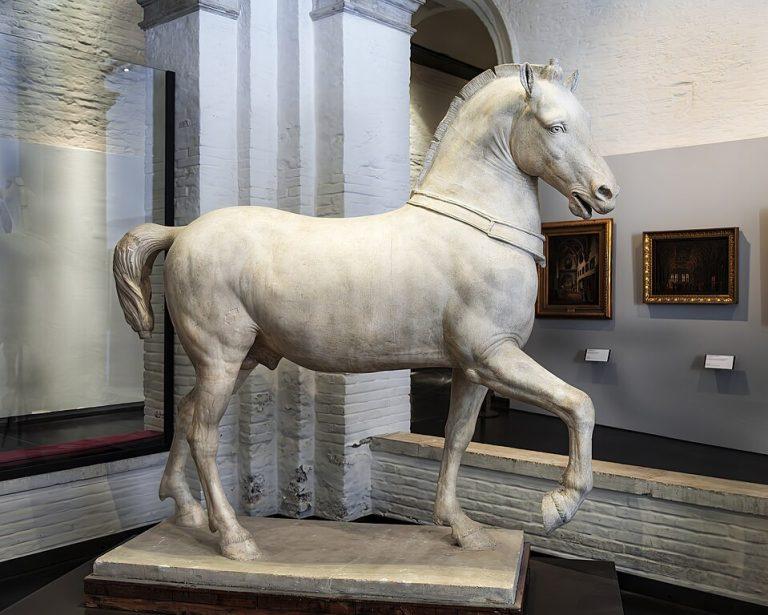
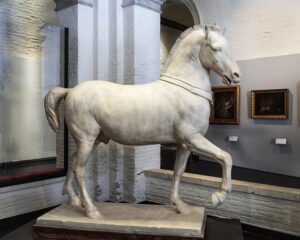
Degas returned to equine sculpture throughout his career. In the 1880s, he experimented with horses in wax, using articulated structures that allowed him to explore difficult positions including trotting, rearing and galloping.
This was not simply an extension of painting into three dimensions.
Sculpture allowed Degas to confront a different problem: how does an artist represent an animal whose identity is fundamentally connected to movement?
The answer was not necessarily to show the fastest possible action. Instead, Degas explored balance, weight and instability.
A horse leaning forward suggests acceleration. A raised leg can suggest interruption. A turned head can introduce uncertainty. The entire body becomes a study in forces.
Photography was crucial to the changing understanding of movement during this period. Eadweard Muybridge’s sequential studies of horses provided a new way to analyse the mechanics of locomotion. Degas’s equine sculptures have subsequently been discussed in relation to this photographic revolution.
The racecourse therefore became more than a sporting location.
It became a laboratory for modern vision.
An artist could observe the relationship between body and motion, human and animal, stillness and acceleration. The subject was contemporary, but the questions were fundamental.
How does a body move?
How does an observer perceive movement?
What happens between two moments?
And how can art make that invisible interval visible?
These questions help explain why Degas’s racing works remain relevant beyond the history of horse racing. They belong to the history of modern art because they investigate perception itself.
The racecourse gave Degas the raw material.
The real subject was movement.