The Jockey as an Artistic Figure: Body, Balance and Identity on the Racecourse
The racehorse often receives the attention in sporting art, but the jockey presents an equally compelling artistic subject.
A jockey’s body is defined by contradiction. The rider must appear light while controlling an animal capable of enormous physical power. The posture is compact but dynamic. The body is simultaneously relaxed and prepared for extreme exertion.
For artists interested in movement, that combination is irresistible.
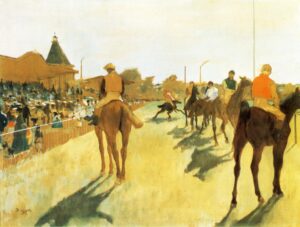
Edgar Degas repeatedly returned to jockeys throughout his career. His racing studies were not simply portraits of individual riders. They were investigations into posture, balance and the relationship between the human body and the horse beneath it. His drawings could reduce a complicated scene to a few lines while retaining the essential physical character of the rider.
The jockey also introduces another element into racing art: identity.
Unlike the horse, whose physical appearance may be recognisable to specialists, the jockey is often identified through clothing.
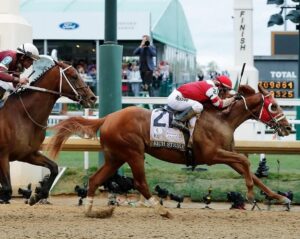
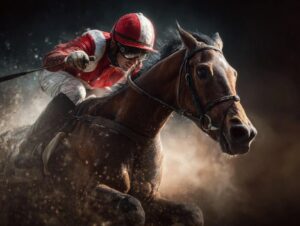
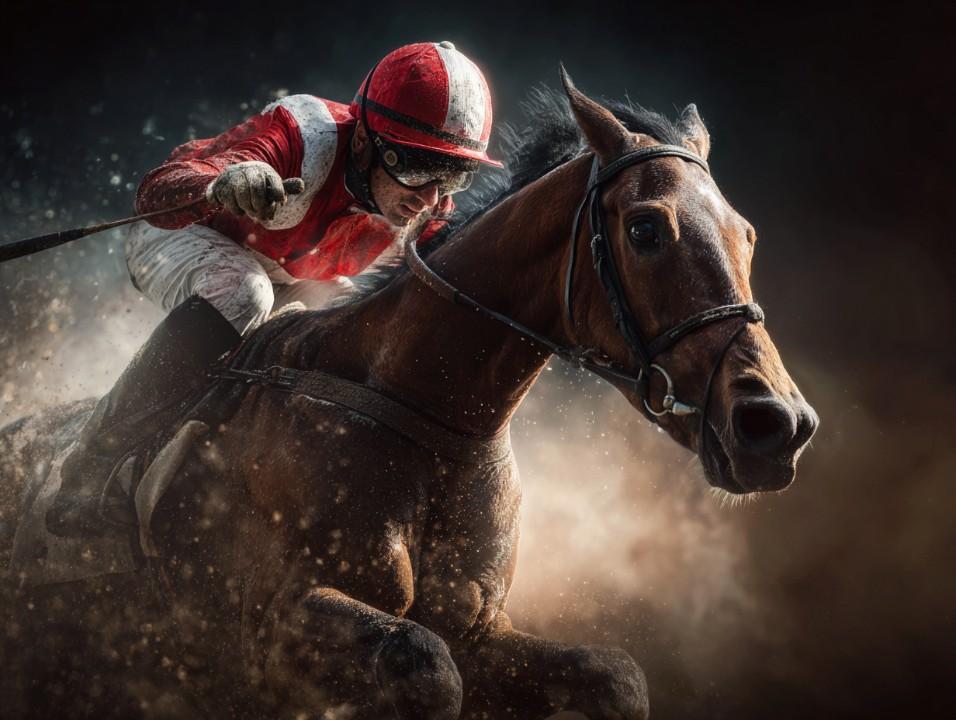
Racing silks create an immediate visual language.
Colours, patterns and caps distinguish one rider from another. In a crowded field, these details become essential to both spectators and artists. The result is that racing naturally produces graphic imagery.
A group of jockeys can look almost abstract when viewed from a distance: flashes of colour moving above a field of horses.
This relationship between identity and visual design extends beyond the race itself.
Jockey silks have become part of the visual heritage of racing. Certain colours and patterns become associated with famous owners, families and horses. A simple combination of colours can carry decades of sporting memory.
The jockey’s position also creates a fascinating problem for artists.
Unlike a standing portrait sitter, the jockey rarely exists in a stable pose. Even before the race begins, the rider is negotiating with the horse. During a race, that relationship becomes almost inseparable.
The artist must therefore represent two bodies at once.
One is human.
The other is animal.
The artistic challenge lies in showing how they operate as a single unit.
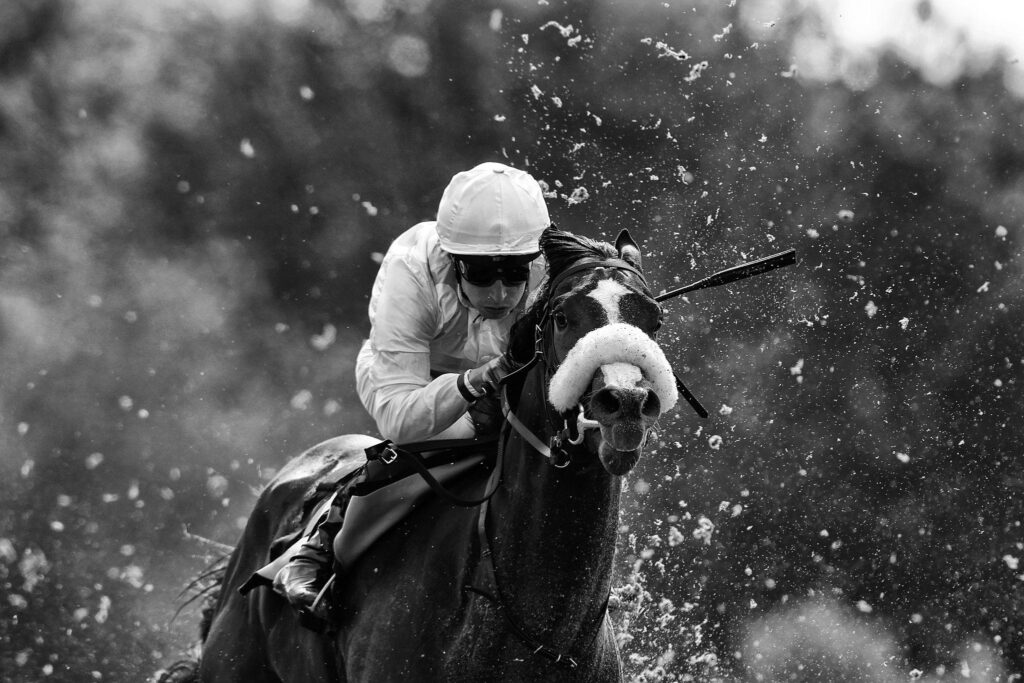
Photography has made this relationship even more visible. High-speed cameras can isolate tiny moments: a rider’s hands moving with the reins, a horse’s legs suspended in mid-stride or a jockey leaning forward at the exact instant of acceleration.
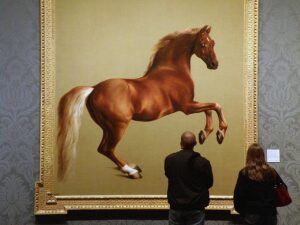
Yet painting and drawing retain something photography cannot always provide.
An artist can choose what to emphasise.
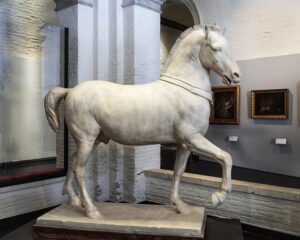
A drawing can exaggerate posture. A painting can alter colour. A sculpture can freeze a particular gesture and give it physical weight.
This is why the jockey remains such a durable figure in racing imagery.
The jockey is not merely a participant in the sport. Visually, the rider represents the meeting point between human intention and animal power.
That relationship gives the figure symbolic possibilities far beyond the racecourse.
The jockey can represent discipline, risk, concentration, ambition or vulnerability.
At the same time, the rider’s small physical scale relative to the horse can remind viewers of the extraordinary power of the animal beneath them.
In this sense, racing art is often at its most interesting when it does not simply show who won.
It shows the relationship between bodies.
The jockey becomes the human measure of the horse’s speed, strength and movement.
And for an artist, that relationship provides an endless subject.