George Stubbs and the Invention of the Modern Sporting Horse
Before George Stubbs, horses had already appeared throughout European art. They could represent power, nobility, war, mythology or wealth. But Stubbs helped create a new visual language for the racehorse.
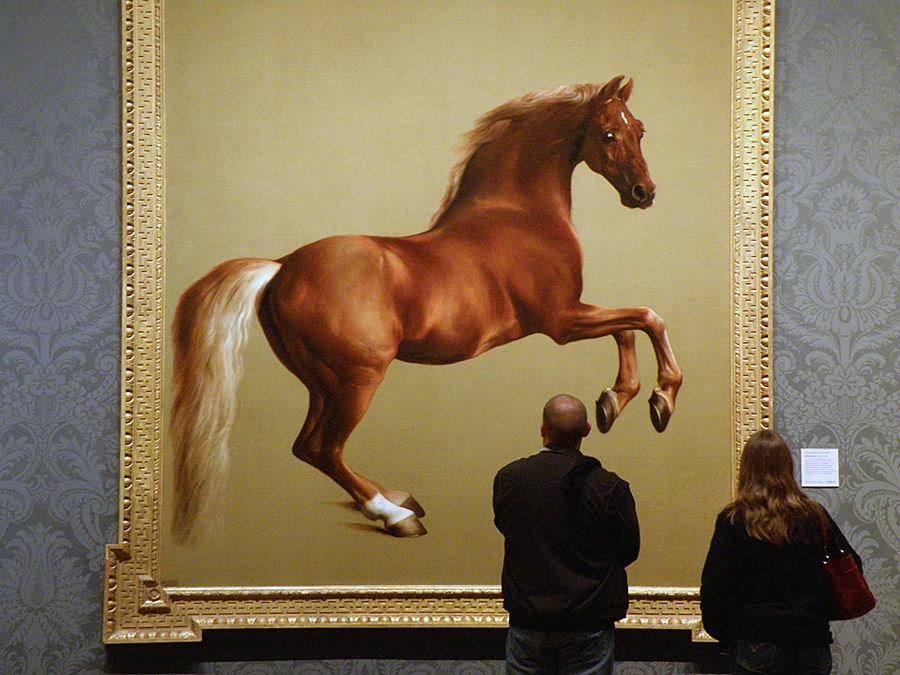
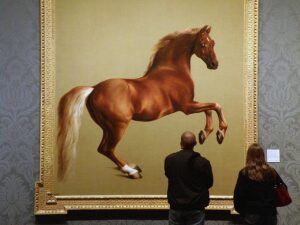
His contribution was not simply that he painted horses exceptionally well. It was that he combined scientific observation with portraiture and the expectations of wealthy sporting patrons.
The result was a new kind of equine image.
Stubbs’s fascination with anatomy was extraordinary. During his research for The Anatomy of the Horse, he spent an extended period studying horse bodies through dissection and produced detailed drawings that eventually became the basis for his landmark publication. His anatomical knowledge remained central to the credibility of his later equine paintings.
This mattered because the eighteenth-century thoroughbred was becoming increasingly important to British sporting culture.
Breeding had become a sophisticated enterprise. Owners cared deeply about bloodlines, physical characteristics and performance. The horse was simultaneously an animal and an investment.
A painting could therefore serve several purposes.
It could document the appearance of an important horse. It could celebrate an owner’s breeding programme. It could preserve the memory of a successful animal. And it could communicate the status of the person who commissioned it.
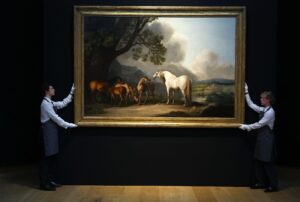
Stubbs’s patrons included members of Britain’s political and aristocratic elite who were deeply involved in horse racing and breeding. Christie’s describes how his relationships with these patrons helped transform sporting painting, particularly through large compositions depicting mares, foals and racehorses.
His paintings often give horses an unusual dignity.
The animal is not merely an accessory to a human figure. It occupies the centre of attention.
That is particularly evident in his portraits of individual racehorses. A horse such as Tristram Shandy could be presented almost as a human portrait sitter, with the animal’s identity becoming the focus of the composition.
This was an important conceptual shift.
A horse could have a personality.
It could possess visual individuality.
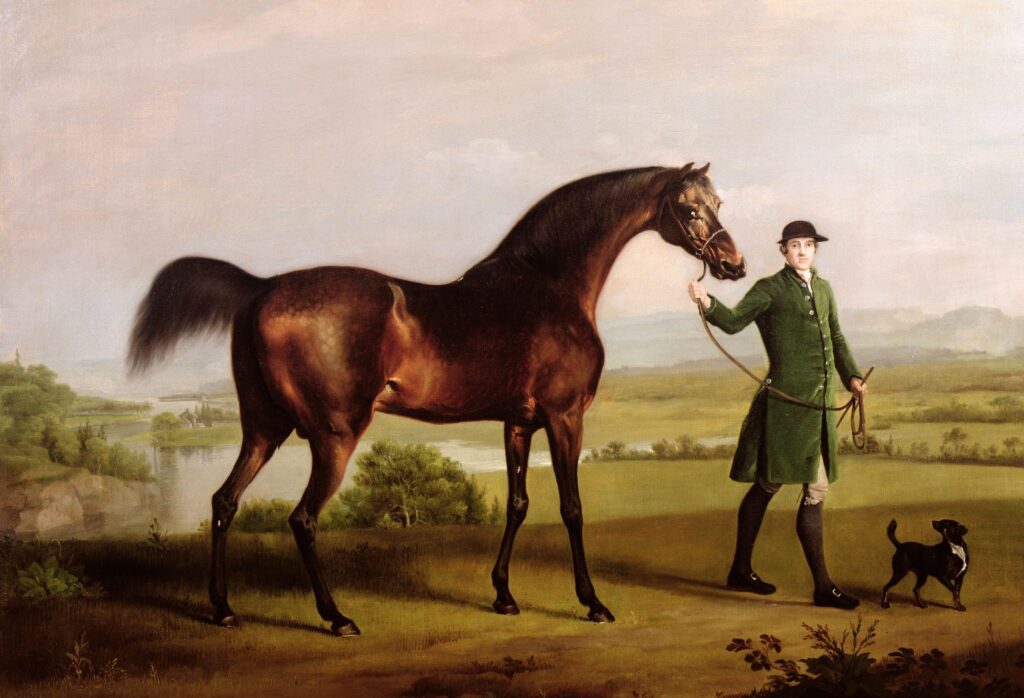
And it could be worthy of being remembered independently of its owner.
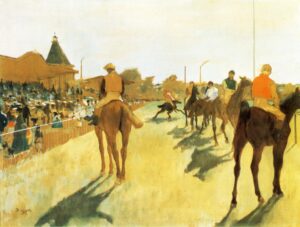
Stubbs’s influence extended far beyond his own lifetime. Christie’s has described him as an important foundation for later artists working with animals and equestrian subjects, including Théodore Géricault and Edgar Degas.
His legacy can also be seen in the continuing market for sporting art.
A major Stubbs painting is not valued simply because it contains a horse. Its significance can involve artistic quality, provenance, historical importance, the identity of the animal and the history of its patronage.
That combination makes equestrian art particularly fascinating to collectors.
It sits between fine art and sporting history.
The painting can be examined as an artwork, but it can also be read as evidence of breeding culture, aristocratic society and the development of horse racing.
Stubbs therefore occupies an important place in the history of both art and racing.
He demonstrated that the thoroughbred could be treated with the seriousness traditionally reserved for human portraiture.
The racehorse was no longer simply part of a sporting scene.
It could be the subject.