The Racecourse as Architecture: Designing Spaces for Spectacle
A racecourse is usually described as a sporting venue, but that description overlooks an important aspect of its identity.
A major racecourse is also a designed environment.
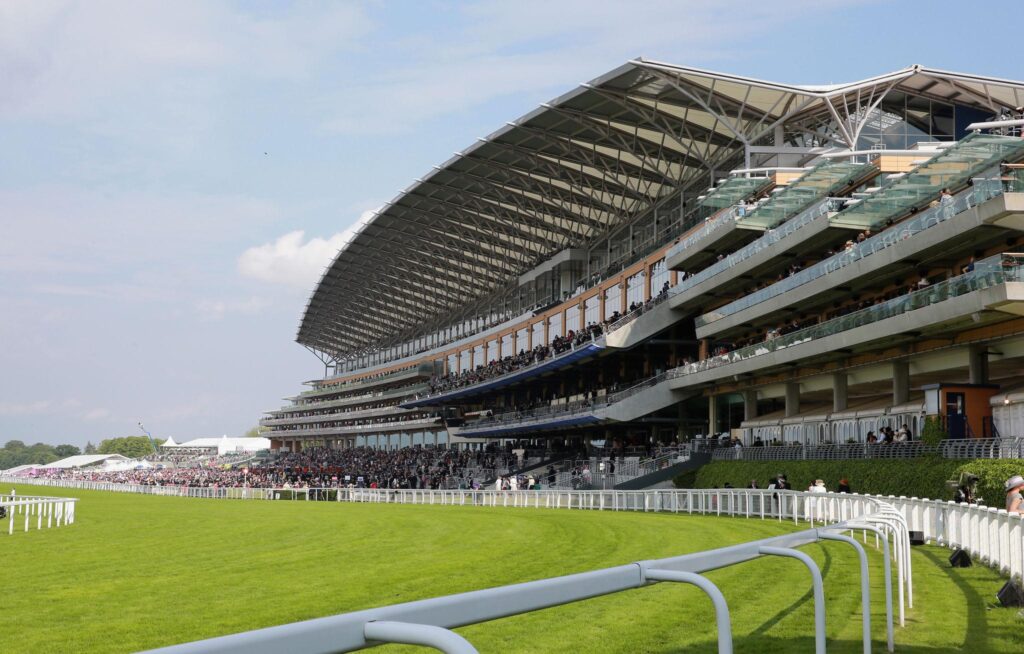
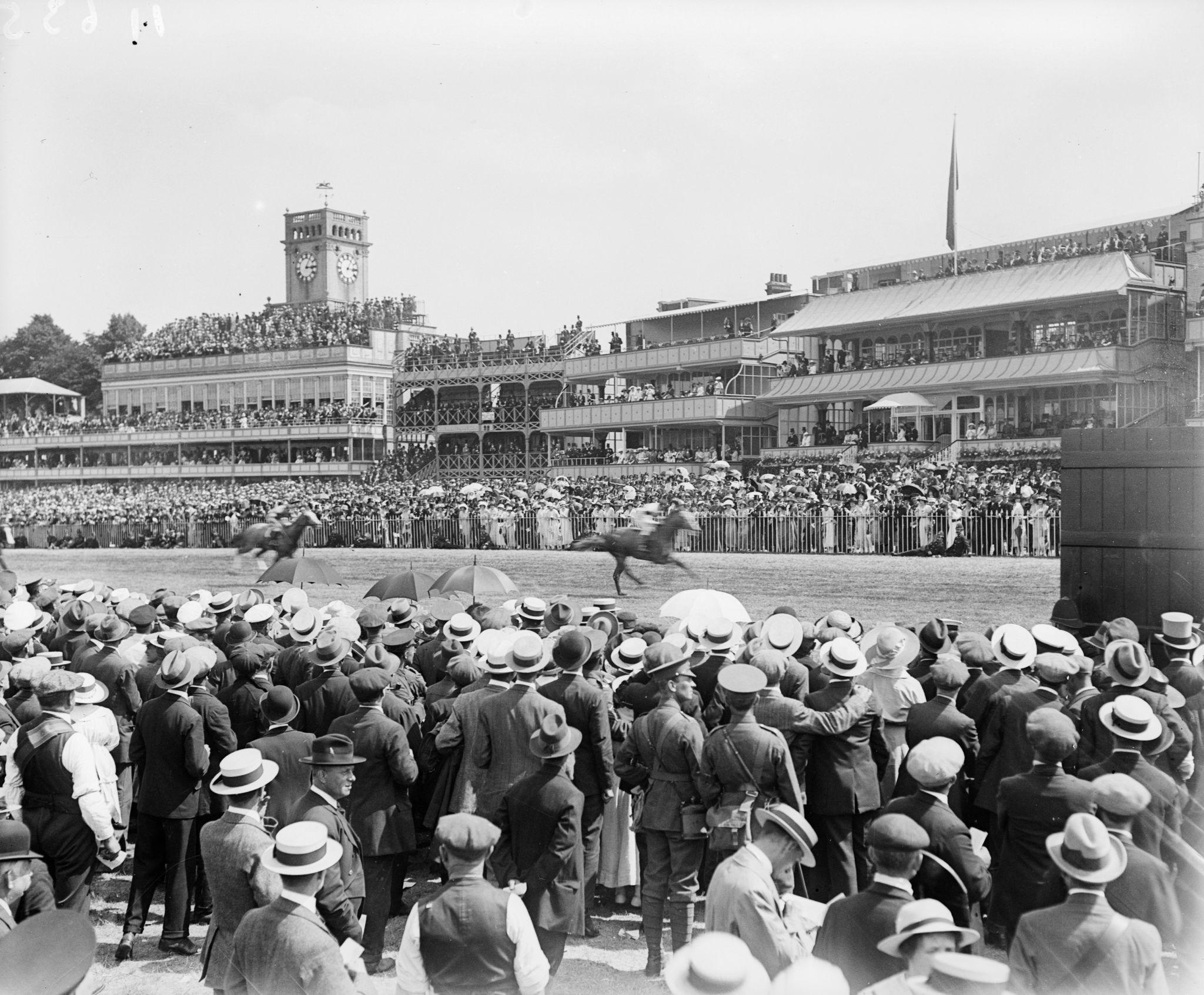
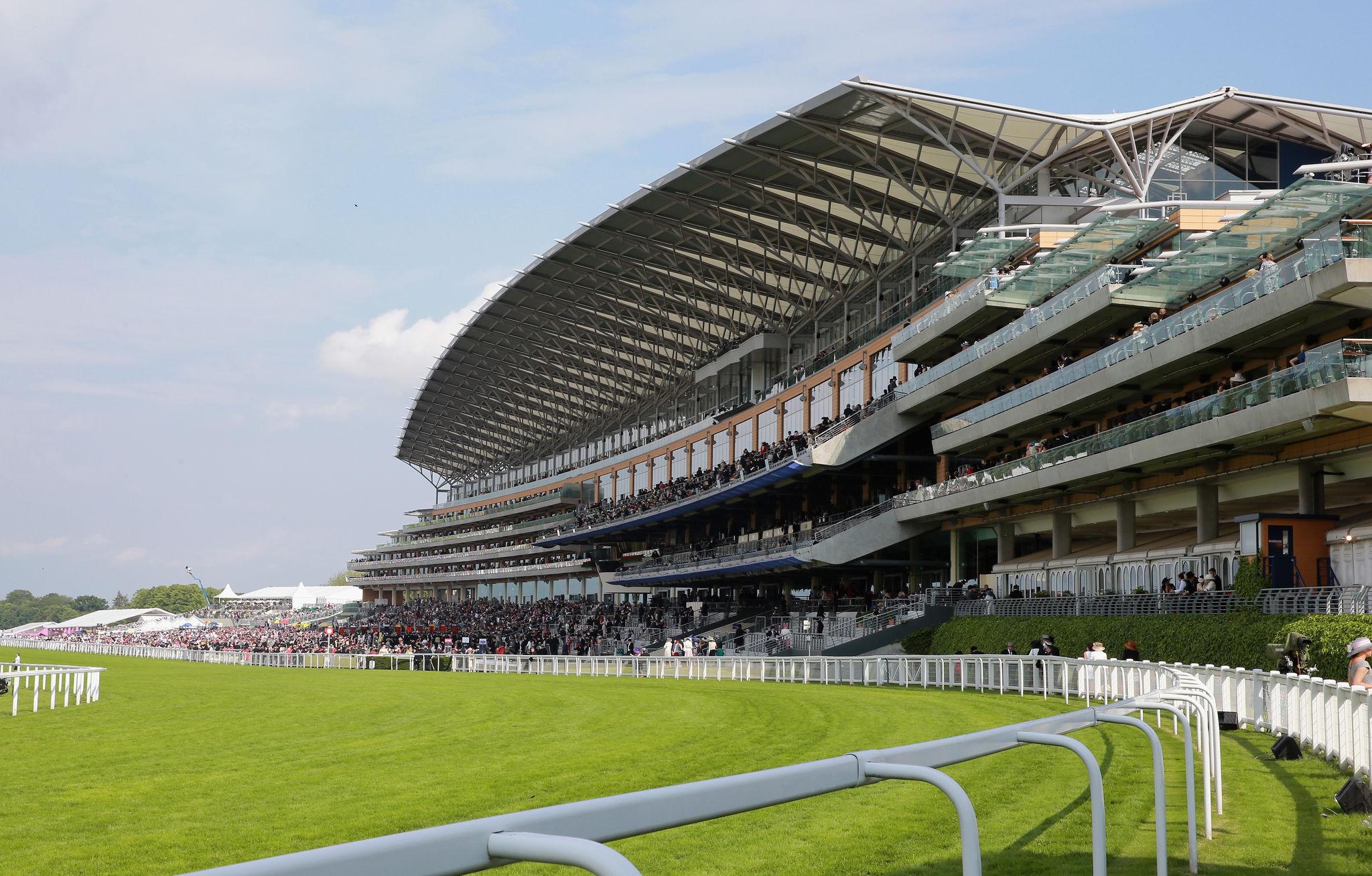
Grandstands, paddocks, entrance gates, viewing areas, lawns, tunnels, weighing rooms and hospitality spaces all contribute to the experience. Architecture determines how spectators see the horses, how crowds move and how the event is presented.
In that sense, the racecourse belongs to the history of visual culture as much as sport.
Unlike a stadium where the field is often surrounded by enclosed seating, a traditional racecourse creates a complicated relationship between architecture and landscape.
The track stretches across an open environment.
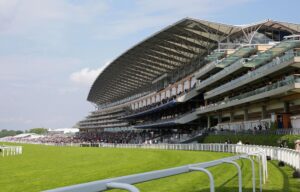
The grandstand provides a monumental viewing point.
The paddock offers an intimate space in which horses can be examined before competition.
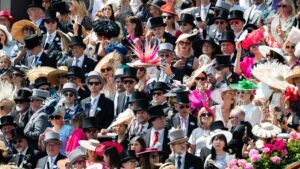
And the crowd moves between these spaces, creating its own visual spectacle.
The architecture of racing therefore has to accommodate two very different experiences.
One is anticipation.
The other is speed.
The paddock is slow. Spectators study horses, trainers and jockeys. The race itself is fast, compressed into minutes. Afterwards, the atmosphere changes again as people gather around results, celebrations and conversation.
Architecture creates the transitions between these emotional states.
The most successful racecourses also become cultural landmarks. Their identity can become inseparable from the city or region in which they are located.
This is one reason racecourse architecture deserves attention beyond sporting history.
A historic grandstand can reveal changing ideas about public entertainment, class and social interaction. Older racing venues can contain architectural traces of earlier sporting cultures, while newer developments often incorporate restaurants, galleries, retail spaces and corporate hospitality.
The racecourse can therefore be understood as a type of theatre.
The track is the stage.
The horses and jockeys are performers.
The spectators are both audience and part of the spectacle.
The difference is that the performance cannot be repeated in exactly the same way.
This unpredictability is central to racing’s visual appeal.
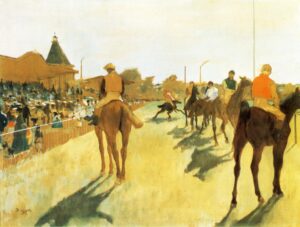
An artist standing at a racecourse does not simply observe horses. They observe an entire choreography involving animals, humans, architecture and landscape.
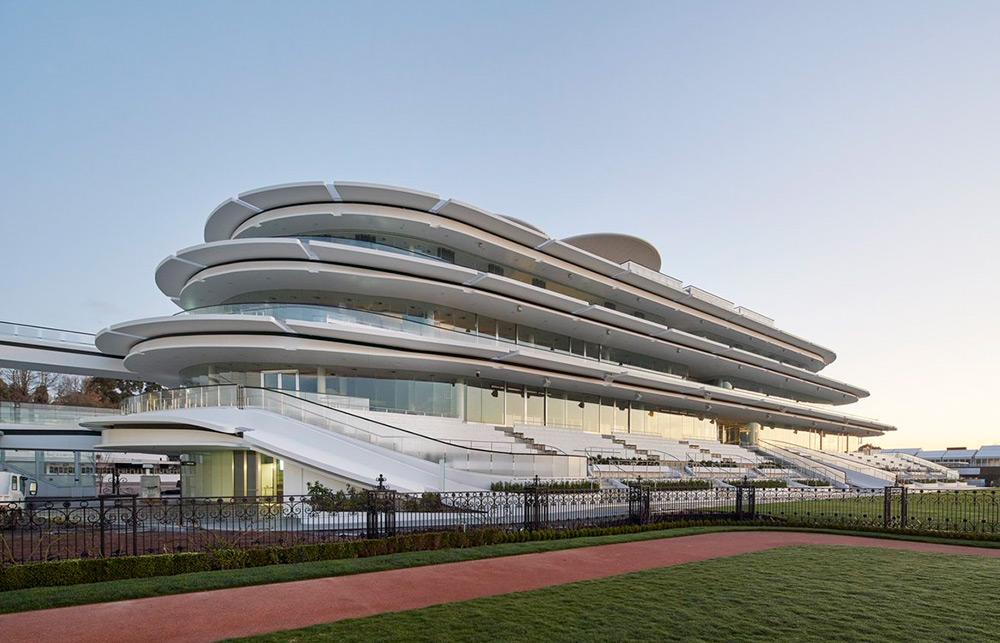
The grandstand frames the race.
The rail creates a visual boundary.
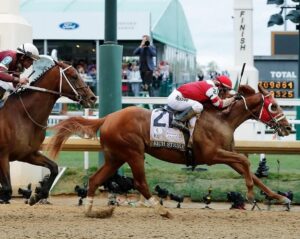
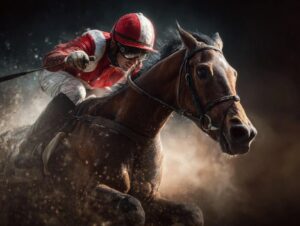
The colours of jockey silks move through the landscape.
The crowd responds collectively.
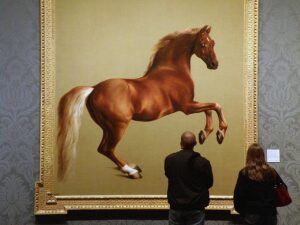
Photography can capture one instant, while painting can reconstruct the atmosphere of an entire afternoon.
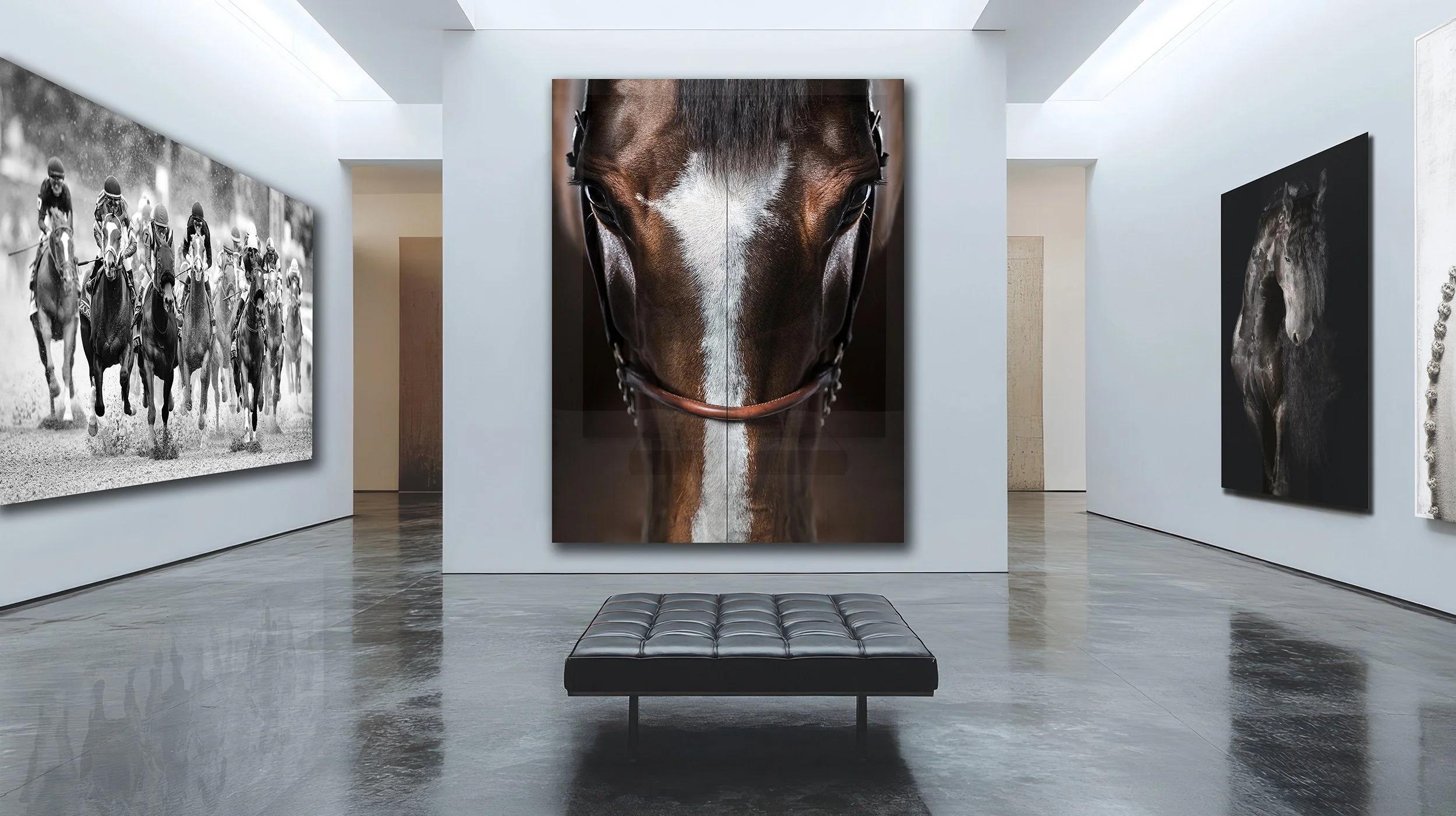
This makes racecourses particularly interesting subjects for contemporary artists and photographers.
Rather than depicting the winner, an artist might focus on empty grandstands after the crowd has left, morning training sessions before spectators arrive, shadows across the paddock or the architectural details that most visitors overlook.
Such images reveal another side of racing.
The sport does not exist only during the few minutes when horses compete.
It exists in the spaces that surround those minutes.
That is perhaps the most interesting architectural lesson of the racecourse: its purpose is not simply to provide somewhere for horses to run.
It creates a world in which the act of watching becomes an experience in itself.